
When many families first hear the phrase memory care, they imagine the basics: safety, supervision, medication reminders, and help getting through the day. Those things still matter, of course. But in 2026, the conversation has grown. Families are looking for more than protection. They want a setting that helps a loved one feel calmer, more comfortable, more engaged, and more like themselves. That shift is important.
Today, strong memory support is not just about watching over someone. It is about creating a daily rhythm that reduces stress, supports confidence, and makes life feel more manageable. Organizations like the Alzheimer’s Association and the National Institute on Aging both emphasize that structured routines and adapted activities can reduce agitation, support mood, and help people living with dementia stay engaged in meaningful ways.
At Haciendas at Grace Village, that idea matters because families are not simply asking, “Will my loved one be safe?” They are also asking, “Will they have good days? Will they feel settled? Will they still have moments of joy, comfort, and connection?” Those are the questions that define great care now.
Why Daily Structure Matters More Than Ever
A person living with memory loss often experiences the world differently than they used to. Small changes in environment, timing, or routine can feel confusing or overwhelming. When the day feels unpredictable, that uncertainty can lead to frustration, anxiety, withdrawal, or agitation. That is one reason structure matters so much.
The Alzheimer’s Association notes that planned routines can help both caregivers and the person living with dementia by reducing the stress of constantly figuring out what comes next, while leaving more room for comfort and enjoyment. It also recommends regular times for waking, meals, dressing, and bedtime, with flexibility as needs change.
In real life, that means a good routine can make the day feel less chaotic and more familiar. Familiarity matters. When someone knows what to expect, even in a simple way, it can create a stronger sense of security.
That is why modern dementia care is moving beyond task-based support. It is becoming more intentional, more personal, and more focused on the quality of each day.
A Good Day Is Built, Not Left to Chance
For many families, one of the biggest surprises about quality memory support is how much thought goes into the flow of the day. This is not just about filling time. It is about shaping a day that feels steady, supportive, and emotionally easier to navigate.
A well-structured day often includes:
- predictable wake-up and bedtime routines
- consistent meal times
- calm transitions between activities
- rest periods to avoid overstimulation
- familiar faces and repeated cues
- opportunities for movement and social interaction
- simple moments of success that build confidence
These things may sound small, but together they can have a big impact. Instead of feeling lost in a long, uncertain day, a resident can move through more manageable, reassuring moments.
That is one of the biggest reasons families are paying more attention to daily activities in memory care. Activities are no longer seen as extras. They are part of how a community helps residents stay connected, supported, and emotionally balanced.
The Goal Is Not to Stay Busy All Day
One common misunderstanding is that structure means a resident should be busy every minute. That is not the point at all. In fact, too much stimulation can sometimes be just as difficult as too little.The goal is not to create a packed schedule. The goal is to create a comforting rhythm.
Some parts of the day should feel active and social. Others should feel quiet and calm. Some residents may enjoy music, light exercise, gardening, or conversation. Others may do better with shorter, simpler, more familiar experiences. The National Institute on Aging recommends adapting activities to the person’s abilities and interests rather than expecting them to fit a rigid plan. That is what makes a strong routine so effective. It respects the person, not just the clock.
Why Routine Can Improve Mood and Confidence
People living with cognitive decline often do better when daily life feels familiar. Repeated routines can reduce the mental effort required to navigate the day. Instead of facing constant surprises, the person begins to recognize patterns: breakfast comes at this time, a walk comes after that, music happens in the afternoon, rest follows lunch. Those familiar patterns can make the environment feel less stressful.
This is where the real routine and dementia benefits begin to show. A structured day can help lower confusion, reduce emotional distress, and support a more settled mood. Guidance from the Alzheimer’s Association also notes that pleasant, structured activities can reduce agitation and improve mood when they are adapted thoughtfully.
Families often notice this in simple ways. Their loved one may seem less restless. They may sleep better. They may participate more. They may appear more comfortable because the day no longer feels so unpredictable. That is a powerful shift.
Life Enrichment Is Part of Good Care Now
In 2026, the strongest communities understand that quality care is not only about what staff do for residents. It is also about what residents still get to experience for themselves. That is where memory care life enrichment becomes so important.
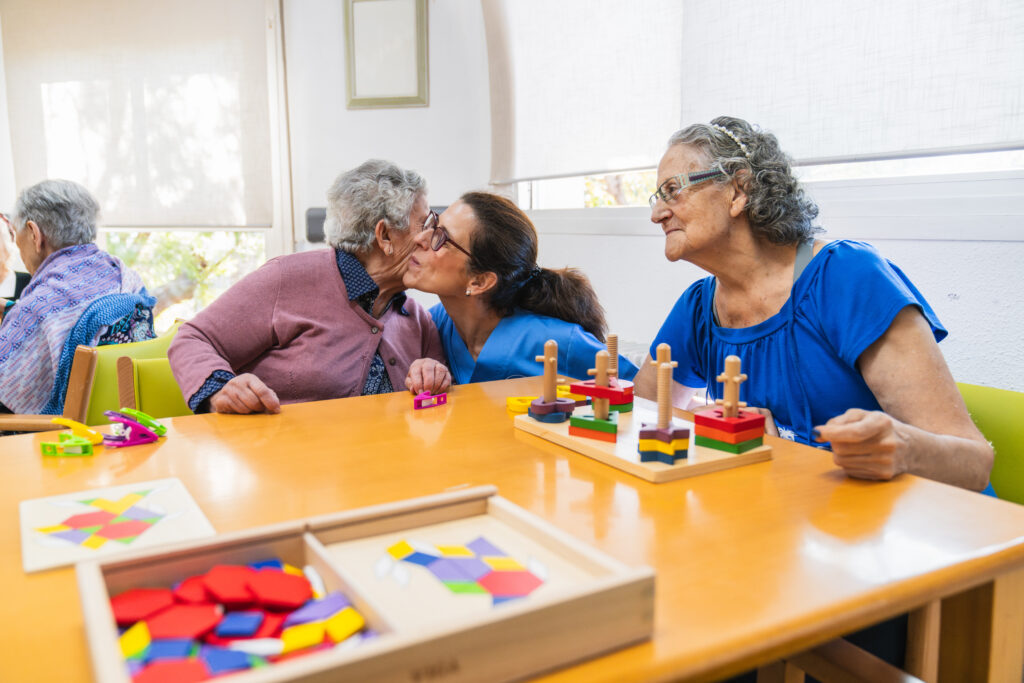
Life enrichment is not about forcing participation or putting on activities just to have something on the calendar. It is about creating meaningful experiences that support dignity, comfort, and connection. That might look like:
- listening to familiar music
- participating in a simple art activity
- helping fold towels or set a table
- spending time outside in a peaceful setting
- joining a small group conversation
- sharing a snack in a calm social space
- taking part in spiritual or reflective routines
The Alzheimer’s Association notes that activities can enhance quality of life and may also reduce behaviors such as wandering or agitation when they are chosen with safety and enjoyment in mind.
That matters because meaningful engagement helps a person feel included in life, not separated from it.
Why Personalized Structure Works Better Than Generic Schedules
No two people experience memory loss the same way. One resident may be more alert in the morning. Another may do better with quiet afternoons. One may love social interaction. Another may need more one-on-one encouragement before joining in.
That is why thoughtful communities are moving toward more personalized, dementia friendly schedules instead of generic programming.
A dementia-friendly schedule is not just organized. It is designed around how people actually function best. It takes into account energy levels, emotional triggers, preferred routines, and the need for calm transitions.
That approach is supported by dementia-care guidance that encourages caregivers to consider a person’s likes, dislikes, strengths, interests, and the times of day when they function best.
When the schedule fits the resident instead of forcing the resident to fit the schedule, daily life usually feels smoother and more humane.
Families Feel the Difference Too
This kind of structure does not only help residents. It also changes the experience for families.
When a loved one has a more consistent rhythm, families often feel more at ease. Visits can become less focused on managing confusion and more focused on connection. Instead of walking into uncertainty, they see a loved one in an environment that feels calm, familiar, and supportive. That peace of mind is huge.
Families want to know that the people caring for their loved one understand more than the clinical side of memory loss. They want to know that staff understand the emotional side too. They want to know that someone is paying attention to what helps their loved one feel safe, what times of day are hardest, what routines bring comfort, and what little details still matter.
That is the difference between basic supervision and truly thoughtful care.
What Families Should Look For
If a family is exploring memory support options, it helps to look beyond safety features alone. Safety is essential, but it should not be the whole story.
They should also look for:
- calm, consistent daily routines
- activities adapted to different ability levels
- staff who understand timing, transitions, and emotional cues
- spaces that reduce overstimulation
- opportunities for simple success and participation
- a balance of engagement and rest
- an atmosphere that feels warm, not rushed or overly clinical
The best communities are often the ones where the day feels intentional. Not rigid. Not chaotic. Just thoughtfully paced.
Why This Approach Stands Out in 2026
Families in 2026 are more informed than ever. They are not just looking for somewhere their loved one can stay. They are looking for somewhere their loved one can still live with dignity, comfort, and as much ease as possible.
That is why daily structure has become such an important part of memory support. It helps transform care from reactive to proactive. It helps prevent distress before it escalates. And it creates more opportunities for meaningful moments throughout the day.
At Haciendas at Grace Village, that philosophy reflects what families are truly looking for now: support that feels steady, compassionate, and deeply human.
Final Thoughts
Memory support has evolved. It is no longer enough to simply supervise someone through the day. Families want care that helps their loved one feel calmer, more connected, and more comfortable in everyday life.
A well-structured day can do more than improve routines. It can create reassurance, support emotional balance, and make space for joy in ways that really matter. When daily life is built with thought, patience, and understanding, the result is often a better experience for everyone involved.
That is what makes this next chapter feel less overwhelming and more supportive. And that is exactly why Haciendas at Grace Village continues to matter for families who want more than care alone.