
Taking care of a loved one who is having trouble thinking can be hard on both your mind and body. Families often want to know what kind of place will really help their loved one’s dignity, comfort, and health every day. One of the best ways to help people nowadays is to give them personalized care through structured and flexible care plans.
Personalized planning has become a key part of modern dementia care that helps people live better lives. Everyone who has memory loss has their own narrative, personality, daily routine, and demands. For this reason, a typical method is not enough. Personalized care plans enable caregivers get to know the residents better and give them support that changes as their needs vary.
Haciendas at Grace Village and other communities know that careful planning is necessary for kind and helpful support. When caregivers make plans that are specific to each person, they make a place where people can feel protected, respected, and involved.
Why it is important to personalize dementia care
Dementia has diverse effects on different people. People have different symptoms, emotional responses, and daily skills. Some people may have a harder difficulty talking to others, while others may not know what time or place they are in. Because of this heterogeneity, personalized care is very important for good caregiving.
Personalized senior care plans assist caregivers figure out what seniors like, what they’re good at, and what their daily routines are so that they feel more at ease. For instance, knowing if someone likes to walk in the morning, likes music from a given time period, or responds well to visual signals might make daily tasks easier and more fun.
Individualized planning focuses on what a resident can still do and enjoy, rather than only their restrictions.
Some of the main benefits of individualized care are:
- Less anxiety and more emotional comfort
- Better daily involvement and participation
- Better interactions between caregivers and residents
- More regularity in daily routines
- Better communication between family members and staff
This careful approach makes sure that residents get help that feels comfortable instead than limiting.
Making Good Memory Care Plans
To make good memory care planning, you need to know the full person. Care teams usually work closely with families to get crucial information about the resident’s past, habits, and likes and dislikes.
These strategies usually have:
- Daily habits and things you like to do
- Needs for medical history and health monitoring
- Help with meals and nutritional advice
- The best ways for the resident to talk to each other
- Ways to help with emotions and conduct
These plans are looked over and changed often when dementia gets worse. Being flexible is important since cognitive conditions vary over time. A plan that works well now might need to be changed in a few months.
When care workers keep improving these tactics, they make the atmosphere more helpful so that residents don’t have to adjust to inflexible systems.
Structured Care to Help Health
Cognitive disorders have an impact beyond memory. They can also affect how well you move, sleep, eat, and feel emotionally. This is why tailored planning is so important for keeping memory care wellness in general.
Care teams keep an eye on various parts of daily life, such as:
- How well you sleep
- Schedules for taking medicine
- Food and water
- Exercise
- Patterns of mood and behavior
Caregivers can spot changes early and act promptly by keeping an eye on these things all the time. Early intervention can help keep a resident stable and stop problems from getting worse.
Structured care systems made just for cognitive problems can help families feel better about their loved one’s health because they know it is being watched.
The Importance of Person-Centered Care
Person-centered memory care is one of the most acknowledged ways to care for people today. Caregivers don’t just look at symptoms; they also look at the person’s identity, experiences, and preferences.
This concept acknowledges that each resident retains a sense of self, despite the advancement of memory loss.
In real life, person-centered care might look like this:
- Playing music from when a resident was young
- Encouraging hobbies like painting or gardening
- Respecting the regular rituals that people like
- Using familiar language or phrases that comfort the resident
- Including spiritual rituals or cultural traditions
These little things make a big difference. Residents with cognitive problems can feel less confused and more emotionally stable when they have familiar experiences.
Caregivers make the world a kinder and more respected place by respecting each person’s uniqueness.
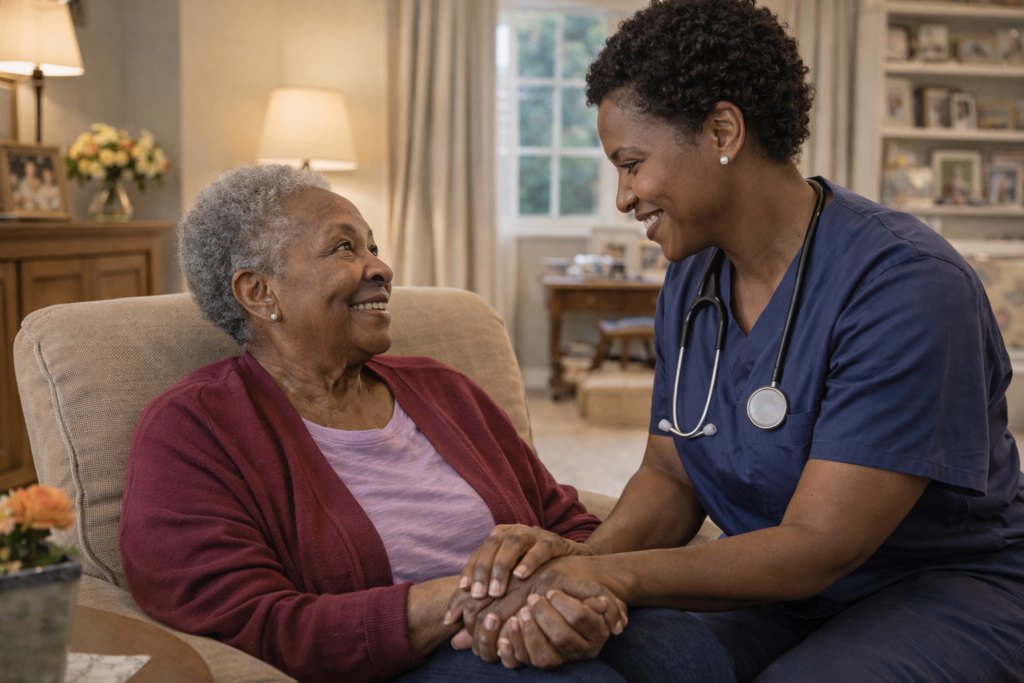
Making Emotional Health Stronger
People with cognitive decline need to take care of both their physical and mental health. People with dementia may feel anxious, frustrated, and alone, especially when they feel like no one understands them.
Thoughtful techniques for supporting people with dementia make them feel respected and safe.
Care teams might employ methods like:
- Softly redirecting when things get confusing
- Daily habits that stay the same and help you get used to things
- Ways to talk that are calm
- Activities that are fun and help with memory and happiness
- Social events that let people connect
These behaviors assist make the community a safe and stable place for people to live. Emotional stability can have a big impact on overall health and daily life over time.
How Personalized Care Helps Families
Taking care of someone with dementia can be very hard for families. A lot of people feel guilty, tired, and unsure about whether they are making the proper choices.
Personalized care plans let families feel better about the support system for their loved one.
When communities put individualized planning first, families get:
- Clear talk about how to take care of someone
- Being open about changes in health and behavior
- Knowing that their loved one’s wishes are being followed gives them peace of mind.
- Ways to stay active in meaningful ways
Personalized care doesn’t take the place of the family’s function; instead, it works with families to form a partnership that focuses on the resident’s health.
Everyday Life in a Customized Memory Care Setting
Residents typically feel more at ease and like they belong when their daily activities are guided by tailored care plans. Familiar rhythms make things less confusing and help folks get through their day more easily.
A normal day might look like this:
- Gentle morning practices that help you get your bearings
- Organized tasks that get the brain working
- Moving your body by doing modest exercise or going for walks outside
- Socializing during meals and in groups
- Time to rest and relax in peace
Because plans are made for each person, caregivers can adapt activities based on how the resident is feeling, how much energy they have, or how their health changes.
This adaptable method makes sure that residents stay interested without feeling too much pressure.
The Long-Term Effects of Customized Care
Over time, personalized planning makes the caring environment more helpful and responsive. Residents generally feel more stable emotionally and more connected to their surroundings.
Families also tend to notice important changes like:
- More comfort during visits
- Less agitation or confusion
- More people taking part in activities
- More favorable relationships with caregivers
Dementia is a disease that becomes worse over time, yet compassionate planning lets people keep their dignity and quality of life at every stage.
Personalized care understands that the need for respect, comfort, and connection never goes away, even as memories change.
Conclusion
To help people with cognitive decline in a meaningful way, you need to be kind, patient, and plan ahead. Caregivers can get to know each resident as a distinct person with their own history, personality, and likes and dislikes through personalized care plans.
Memory care homes can make their residents feel safe and valued by concentrating on personalized routines, emotional well-being, and flexible support systems. Families can find great peace of mind during a difficult journey when they know that their loved one is being cared for with compassion and respect. Individualized care is not simply about treating symptoms; it’s also about protecting residents’ dignity, building connections, and helping them have the best quality of life possible.